

When people hear estradiol, they usually think of reproduction. But one of its most remarkable roles is in the brain.
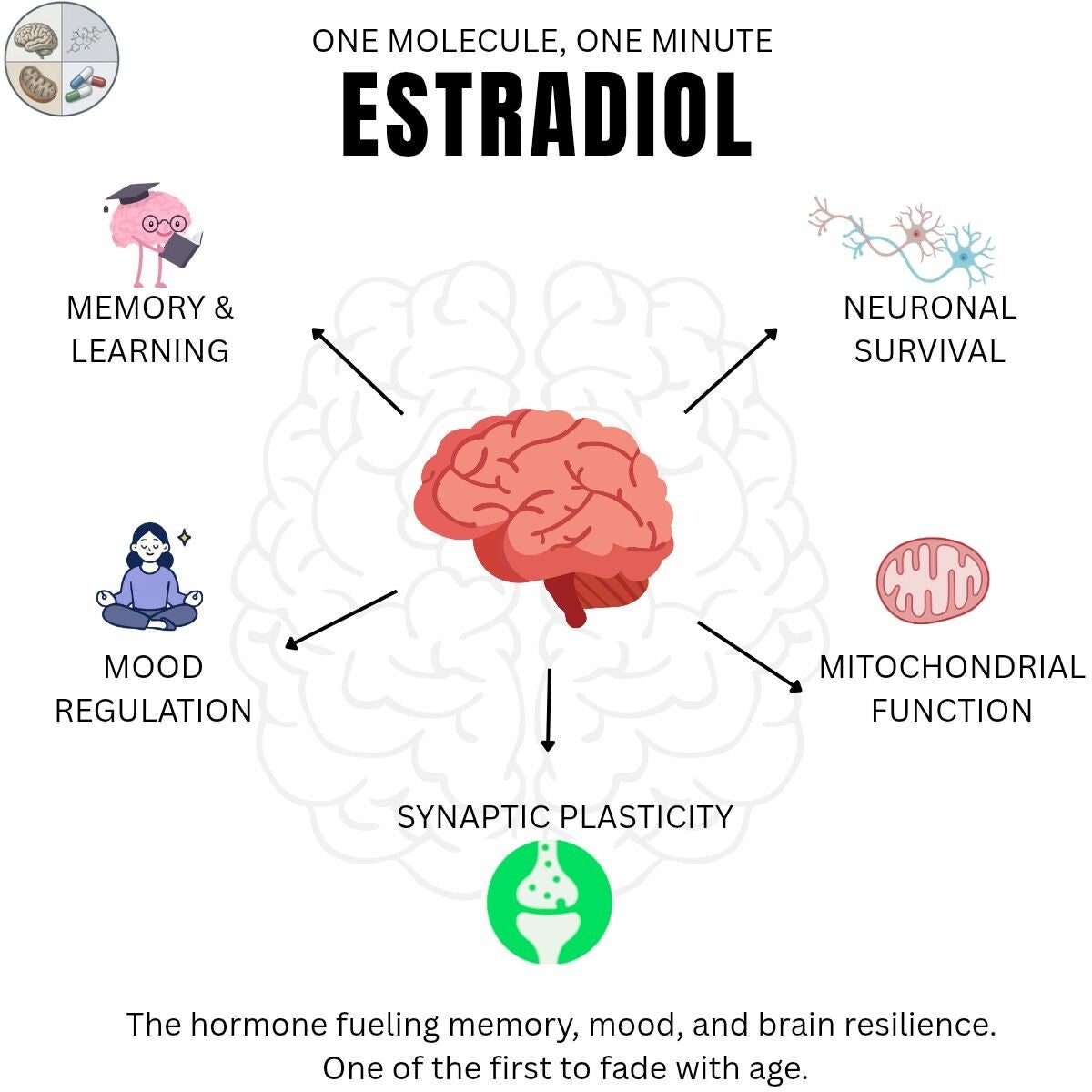
Far from being "just a sex hormone," estradiol helps neurons communicate, strengthens synaptic connections that underlie learning and memory, supports mitochondrial energy production, promotes neuronal survival, and contributes to mood regulation. In other words, it helps the brain stay adaptable, resilient, and energetically efficient.
One of the most striking aspects of brain ageing is that estradiol is also one of the first major neuroprotective signals to decline. During menopause, this hormonal shift coincides with changes in brain metabolism, cognition, and inflammatory responses, and is thought to contribute to the increased risk of Alzheimer's disease observed in women.
While estradiol is not the sole driver of these processes, understanding how this single molecule influences so many aspects of brain function is helping researchers uncover new mechanisms of healthy ageing and identify potential therapeutic strategies for neurodegenerative diseases.
💡 Sometimes, one molecule can influence an entire network.
#OneMoleculeOneMinute #Estradiol #Neuroscience #BrainHealth #Neurobiology #Mitochondria #SynapticPlasticity #Menopause #AlzheimersDisease #HealthyAgeing
Add comment
Comments