

Say the word testosterone, and most people picture muscle mass or libido. But this hormone also plays a quiet, essential role inside the brain.
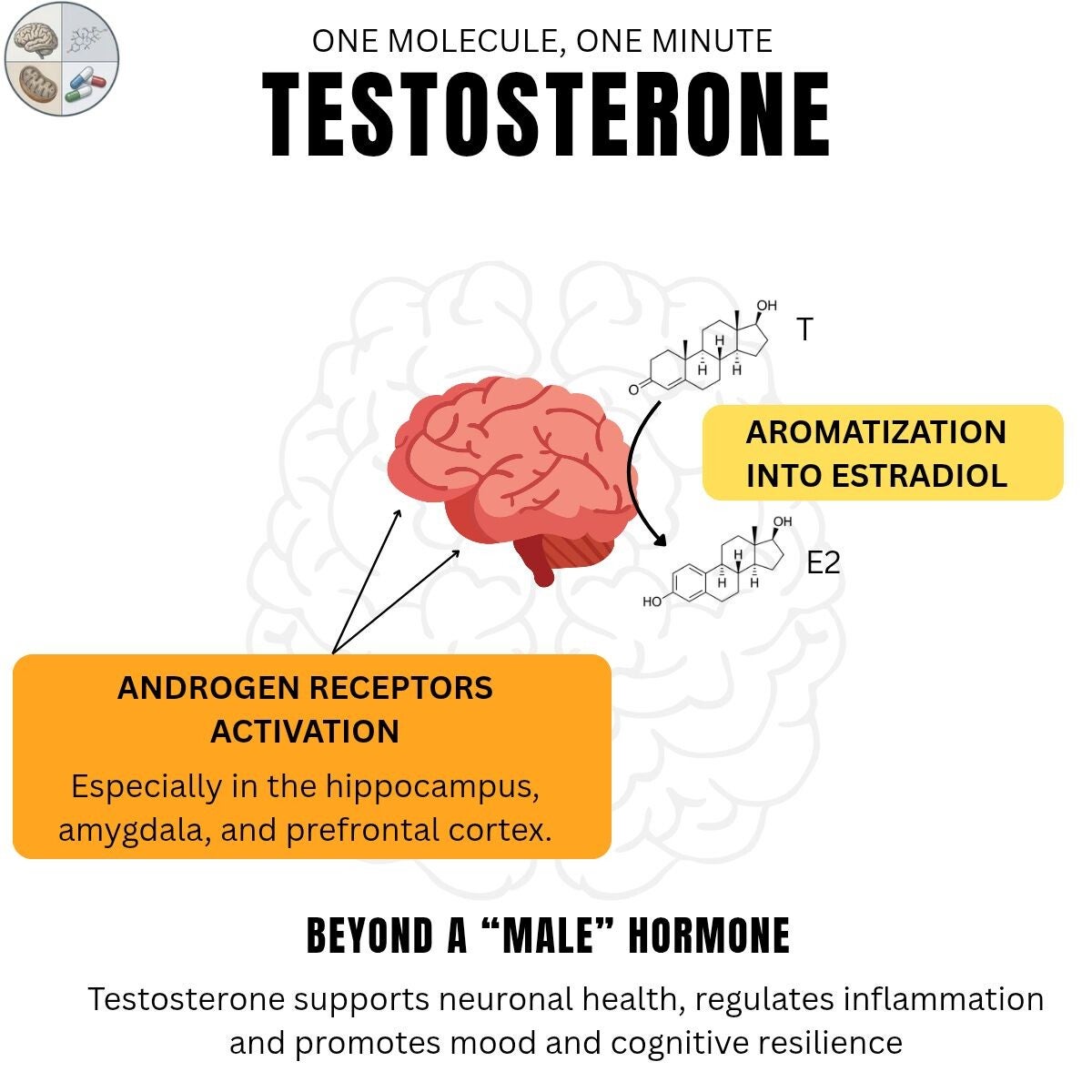
In the brain, it binds to androgen receptors in regions involved in memory, emotion, and decision-making, including the hippocampus, amygdala, and prefrontal cortex. There, it supports neuronal survival, helps regulate neuroinflammation, and contributes to cognitive function and emotional well-being.
Its story doesn't end there.
Within the brain, the enzyme aromatase can convert testosterone into estradiol, allowing testosterone to exert some of its effects through estrogen signaling. Rather than acting as separate systems, these hormones are part of an interconnected network that helps maintain brain health.
In the Barreto Lab, we often explore how declining estradiol contributes to brain ageing and neurodegeneration. But understanding the ageing brain requires looking beyond a single hormone. Testosterone, and its interactions with estradiol, also shapes how the brain ages, helping explain why women and men can follow different trajectories of cognitive ageing and disease vulnerability.
#Neuroscience #BrainResearch #Testosterone
Add comment
Comments