

Alzheimer’s disease (AD) is often discussed through its classical hallmarks: amyloid-β and tau. Yet long before extensive neurodegeneration, the brain already shows profound changes in how it uses and manages energy.
Brain hypometabolism is one of the earliest functional alterations observed in AD, with reduced glucose utilisation detectable during prodromal stages. Alongside this, mitochondrial dysfunction, altered bioenergetics and increased oxidative stress suggest that the problem extends beyond glucose availability alone.
The emerging picture is therefore more complex than simply a brain that is “running out of energy.”
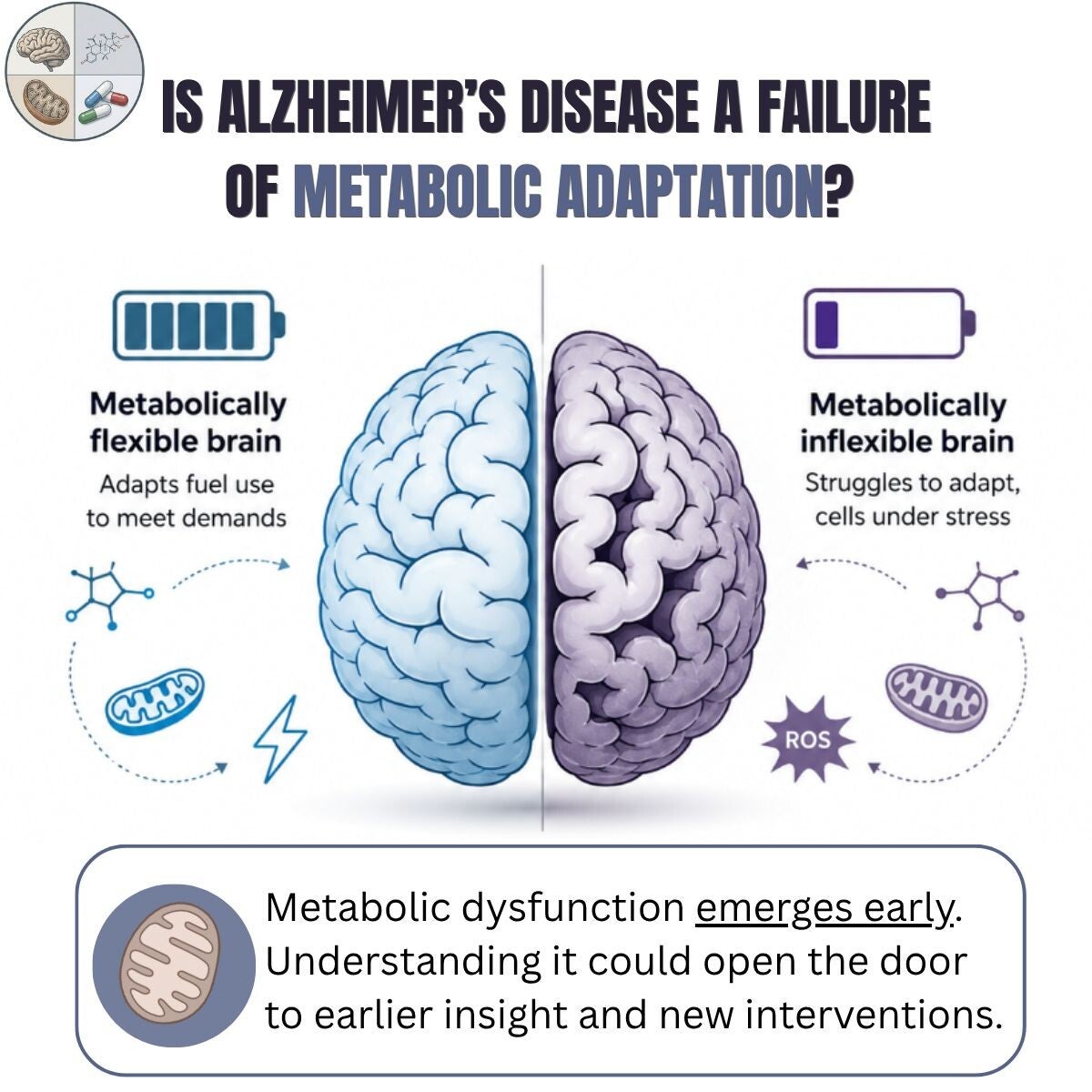
Increasing evidence points towards metabolic inflexibility: a reduced ability of brain cells to adapt energy production and substrate utilisation to changing demands and cellular stress.
And this is why studying metabolism in AD matters.
If metabolic dysfunction emerges before substantial pathology, it could provide a window into the early biology of disease, helping us understand when metabolic adaptation becomes failure, why some cells become vulnerable, and whether this process can still be modified.
🔬 The challenge now is to understand whether metabolic dysfunction is a driver, a consequence, or part of a dynamic feedback loop in AD progression.
#AlzheimersDisease #Neuroscience #BrainMetabolism #Mitochondria #Neurodegeneration #MetabolicHealth #BarretoLab
Add comment
Comments