

Most conversations about high-fat diets focus on weight gain, cholesterol, or cardiovascular disease. But there’s another story unfolding in the brain.
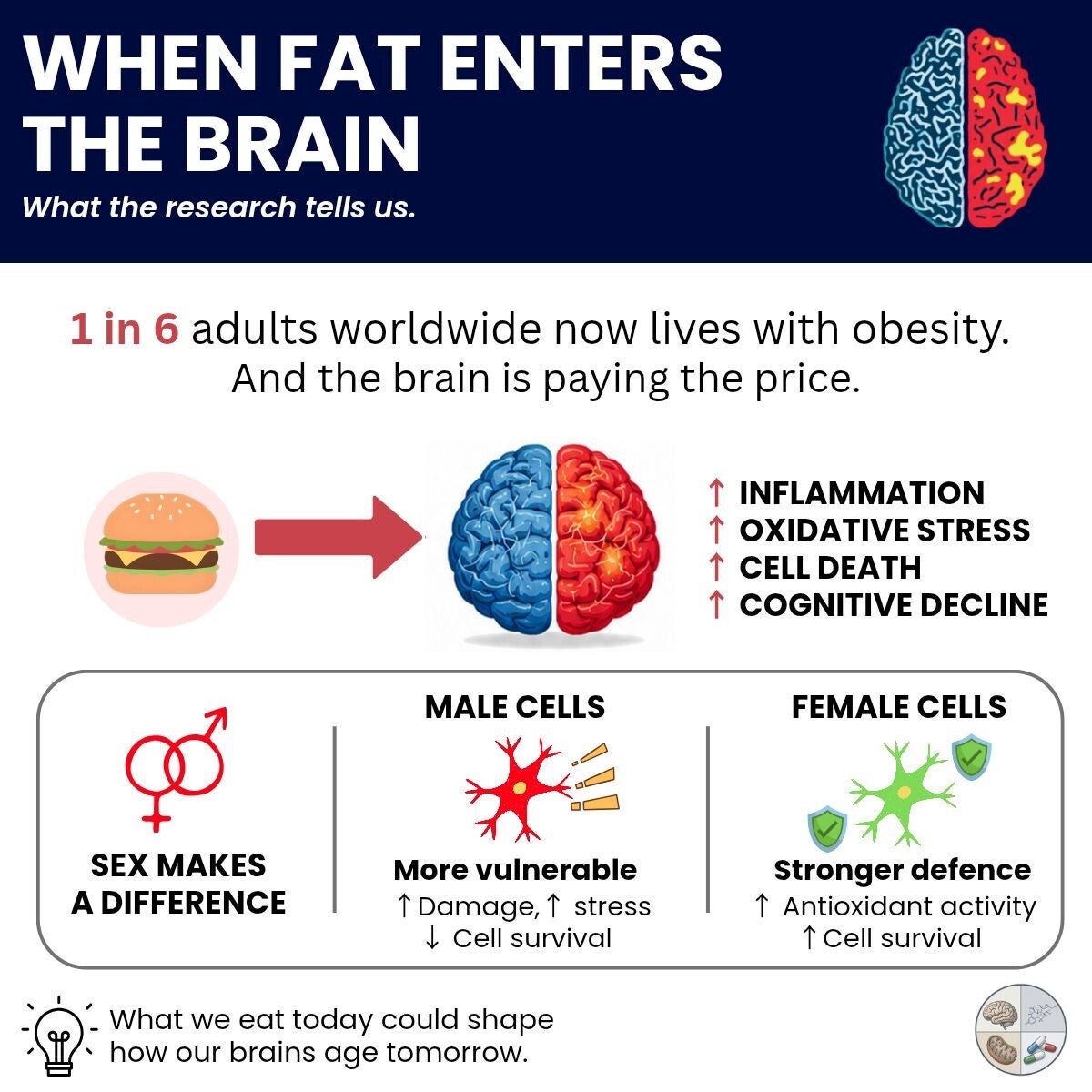
Certain saturated fats, such as palmitic acid, one of the most common fats in Western diets, can accumulate in cells that are not designed to store excess lipids. This process, known as lipotoxicity, can trigger inflammation, oxidative stress, and cellular dysfunction.
In the brain, astrocytes are among the first cells exposed to this challenge.Research from our lab shows that excess palmitic acid disrupts astrocyte function, altering their metabolism and reducing their ability to protect neurons.
Interestingly, these effects are not identical across sexes. Our work suggests male astrocytes may be more vulnerable to lipotoxic stress, while female cells show stronger protective responses, pointing to the role of hormone-related pathways in resilience.
The connection between diet, metabolism, and brain ageing is still being uncovered, but it may be more important than we once thought.
#Neuroscience #BrainHealth #Metabolism #Astrocytes #Neuroinflammation #Obesity #Neurodegeneration
Add comment
Comments